

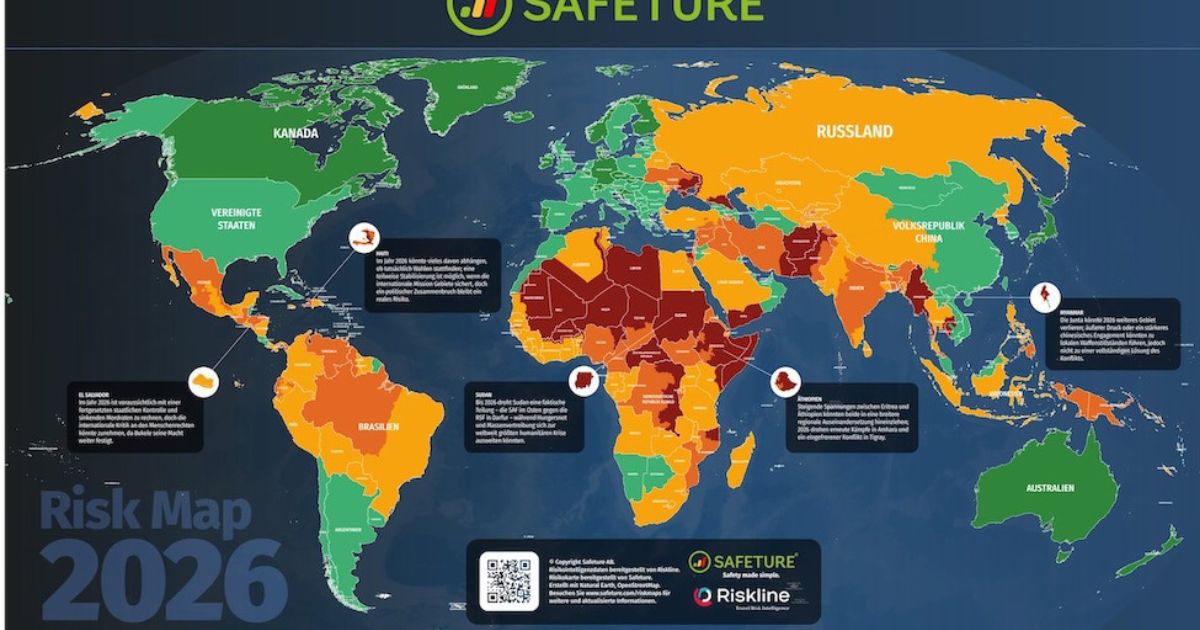
Most Dangerous Countries: This heading refers to countries that rank among the least peaceful in the world according to the 2026 Global Peace Index (GPI). The GPI, produced by the Institute for Economics & Peace, evaluates 163 countries and territories using indicators covering societal safety and security, ongoing domestic and international conflict, and militarisation.
According to the 2026 Global Peace Index, the five countries at the bottom of the overall peacefulness ranking are Russia, Sudan, the Democratic Republic of the Congo, Ukraine, and Israel. This ranking measures overall peacefulness; it should not be interpreted as a simple measure of everyday crime or as meaning that every location within a country is equally dangerous.The 2026 report also notes that global peacefulness deteriorated for the 12th consecutive year, with 61 active state-based conflicts, the highest number recorded since the end of World War II.
For an article, the heading therefore works best when the ranking is presented as a data-based assessment of conflict, security, and militarisation, rather than as a blanket statement about the people or culture of each country.
Trending Today: Instagram Bio For Boys | 897+ Cool, Stylist, Attitude & VIP Bio
Methodology And Limitations
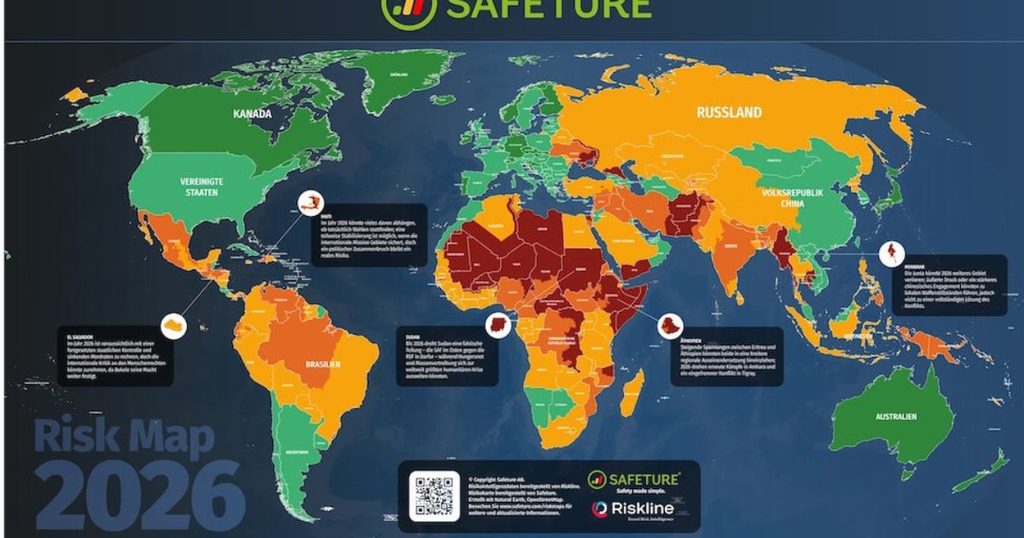
The 2026 Global Peace Index (GPI) provides the basis for comparing countries by their overall level of peacefulness. Produced by the Institute for Economics & Peace (IEP), the index covers 163 countries and territories, representing about 99.7% of the world’s population. It uses 23 qualitative and quantitative indicators across three broad areas: societal safety and security, ongoing domestic and international conflict, and militarisation.
The methodology combines different types of information, including conflict data, security conditions, military factors, and expert assessments. Where quantitative data are unavailable, country analysts may use alternative sources or estimates, which are reviewed for consistency and comparability.
However, the GPI has important limitations. A country’s position reflects a composite measurement of peacefulness and should not be treated as a direct measure of crime, personal safety, or the risk faced by every individual or city. The index also combines indicators with different characteristics into one overall score, meaning that countries can have very different reasons for receiving similar rankings. IEP itself notes that the rankings are relative and should not be the sole source of information for decisions involving peace, security, economics, or policy.
Therefore, the phrase most dangerous countries should be used carefully. In this article, it refers specifically to countries with the lowest levels of overall peacefulness according to the 2026 GPI, rather than claiming that every part of those countries is equally dangerous.
Limitations
The 2026 ranking should be understood as a measure of overall peacefulness, not a complete measurement of how dangerous everyday life is in every country. A country may rank poorly because of war, political instability, militarisation, or international conflict even if some regions remain relatively safe.
Another limitation is that the ranking combines multiple indicators into a single score. These indicators measure different aspects of peace and security, so two countries with similar overall scores may face very different circumstances.
Data availability can also vary between countries. Some indicators rely on official statistics, while others involve expert assessments or estimates. In addition, conditions can change quickly because of new conflicts, political developments, or security events.
For these reasons, the 2026 ranking should be used as a broad comparative tool rather than a definitive statement about personal safety. Readers should also consider current travel advisories, local conditions, regional differences, and recent developments when assessing risk.
Top 25 Most Dangerous Countries (2026)
For a factual 2026 ranking, the Global Peace Index (GPI) is a useful source because it measures overall peacefulness using 23 indicators covering societal safety and security, ongoing conflict, and militarisation. The GPI ranks 163 countries and territories.
Using the 25 lowest-ranked countries in the 2026 GPI as the basis for this article, the list is:
| Rank | Country | GPI Score |
| 139 | Mexico | 2.650 |
| 140 | Iraq | 2.662 |
| 141 | Colombia | 2.735 |
| 142 | Haiti | 2.755 |
| 142 | Nigeria | 2.755 |
| 144 | Iran | 2.759 |
| 145 | Chad | 2.769 |
| 146 | Niger | 2.832 |
| 147 | North Korea | 2.845 |
| 148 | Palestine | 2.877 |
| 149 | Burkina Faso | 2.882 |
| 150 | Central African Republic | 2.906 |
| 151 | Myanmar | 2.911 |
| 152 | Pakistan | 2.919 |
| 153 | Somalia | 2.973 |
| 154 | Mali | 2.996 |
| 155 | Syria | 3.067 |
| 156 | Yemen | 3.081 |
| 157 | Afghanistan | 3.106 |
| 158 | South Sudan | 3.116 |
| 159 | Israel | 3.124 |
| 160 | Ukraine | 3.184 |
| 161 | Democratic Republic of the Congo | 3.189 |
| 162 | Sudan | 3.195 |
| 163 | Russia | 3.367 |
These positions and scores come from the 2026 Global Peace Index, with Russia ranked 163rd overall and therefore last in the index.
Important Most dangerous is an article friendly description, not the GPI’s official terminology. The index measures overall peacefulness, so a low ranking can reflect armed conflict, political instability, militarisation, or other security conditions rather than everyday crime or personal danger in every part of a country.
25 lowest-ranked countries in the 2026 Global Peace Index
Countries ranked from 139th to 163rd by overall peacefulness; higher scores indicate lower peacefulness.
| country | score |
| Mexico | 2.65 |
| Iraq | 2.662 |
| Colombia | 2.735 |
| Haiti | 2.755 |
| Nigeria | 2.755 |
| Iran | 2.759 |
| Chad | 2.769 |
| Niger | 2.832 |
| North Korea | 2.845 |
| Palestine | 2.877 |
| Burkina Faso | 2.882 |
| Central African Republic | 2.906 |
| Myanmar | 2.911 |
| Pakistan | 2.919 |
| Somalia | 2.973 |
| Mali | 2.996 |
| Syria | 3.067 |
| Yemen | 3.081 |
| Afghanistan | 3.106 |
| South Sudan | 3.116 |
| Israel | 3.124 |
| Ukraine | 3.184 |
| Democratic Republic of the Congo | 3.189 |
| Sudan | 3.195 |
| Russia | 3.367 |
Detailed Profiles Of The Top 10 Most Dangerous Countries In The World
For this article, most dangerous refers to the 10 countries ranked lowest for overall peacefulness in the 2026 Global Peace Index (GPI). The GPI evaluates 163 countries using 23 indicators across societal safety and security, ongoing conflict, and militarisation.
1. Russia
Russia ranks 163rd, the lowest position in the 2026 Global Peace Index. Its position reflects the continuing war involving Ukraine, high levels of militarisation, and deterioration across conflict and security indicators. The GPI identifies Russia as the least peaceful country for the first time in the index’s history.
The country’s large military expenditure and continued involvement in the Ukraine war are major factors behind its low overall peacefulness score. The conflict has also contributed to wider regional instability and increased geopolitical tensions.
2. Sudan
Sudan remains deeply affected by the civil war between the Sudanese Armed Forces (SAF) and the Rapid Support Forces (RSF). The conflict, which began in 2023, has resulted in extensive displacement, civilian suffering, and severe humanitarian needs.
The 2026 GPI describes Sudan as an important anchor of a wider conflict system in the Horn of Africa. More than 12 million people have been displaced, with refugees moving into neighboring countries.
3. Democratic Republic of the Congo
The Democratic Republic of the Congo (DRC) continues to experience serious security problems, particularly in the country’s eastern regions. Armed groups, political instability, and regional involvement contribute to persistent conflict.
The GPI places the DRC among the world’s least peaceful countries, with its position influenced heavily by ongoing domestic conflict and security concerns.
4. Ukraine
Ukraine’s position is strongly influenced by the continuing Russia Ukraine war. The country faces extensive military activity, casualties, infrastructure damage, displacement, and continuing security risks.
The GPI ranks Ukraine fourth from the bottom overall and records one of the highest scores in its Ongoing Domestic and International Conflict domain.
5. Israel
Israel’s ranking reflects the continuing effects of the Israel Hamas conflict and wider regional tensions. The GPI’s measures incorporate ongoing conflict, military activity, and security conditions.
Israel ranks among the five least peaceful countries overall in 2026. Its position should be understood as an assessment of national peacefulness rather than a statement that every Israeli city or region has the same level of risk.
6. South Sudan
South Sudan continues to face political instability, internal tensions, displacement, and weak institutional security. Although the country gained independence in 2011, political and communal conflicts have continued to affect stability.
The GPI identifies the Horn of Africa as an interconnected conflict system, with South Sudan affected by regional displacement and other cross-border pressures.
7. Afghanistan
Afghanistan remains among the world’s least peaceful countries. Its security situation is shaped by political instability, restrictions on civil society, terrorism-related risks, economic hardship, and limited access to effective justice and security institutions.
The GPI’s 2026 data place Afghanistan among the countries with the poorest overall peacefulness scores.
8. Yemen
Yemen has experienced years of civil conflict, political fragmentation, humanitarian crisis, and economic disruption. Although the intensity of some fighting has changed over time, the country’s underlying security and political challenges remain significant.
Yemen records one of the highest scores in the GPI’s Ongoing Conflict domain, contributing substantially to its low overall ranking.
9. Syria
Syria continues to face the long-term consequences of its civil war, including displacement, damaged infrastructure, political fragmentation, and continuing security challenges.
The 2026 GPI places Syria among the world’s five least peaceful countries in its Ongoing Domestic and International Conflict domain, illustrating the continuing impact of conflict on the country’s overall position.
10. Mali
Mali is affected by armed insurgencies, political instability, and wider insecurity across the Sahel. Conflict involving militant groups and the challenges of maintaining security across a large territory have contributed to its low peacefulness ranking.
The 2026 GPI places Mali 154th overall, making it the tenth-lowest-ranked country in the index.
What These Countries Have in Common
The ten countries at the bottom of the 2026 GPI differ greatly in geography, history, and political systems. However, many face combinations of armed conflict, political instability, militarisation, displacement, weak security institutions, or regional conflict spillovers. The GPI also reports that global peacefulness declined for the 12th consecutive year, while the number of active state-based conflicts reached its highest level since World War II.
Importantly, “most dangerous” is not an official GPI category. These are the ten countries with the lowest overall peacefulness scores, and conditions can vary considerably between regions and cities within each country.
Why These Countries Are Dangerous
The countries at the bottom of the 2026 Global Peace Index (GPI) face different challenges, so there is no single reason why they rank among the least peaceful countries. The GPI evaluates societal safety and security, ongoing conflict, and militarisation, using 23 indicators across 163 countries.
1. Armed Conflict and War
Ongoing wars are one of the most significant factors. Countries such as Russia, Ukraine, Sudan, Israel, Yemen, and Syria are affected by major armed conflicts or continuing hostilities. War can result in deaths, displacement, destruction of infrastructure, and long term instability.
2. Political Instability
Political crises, disputed authority, coups, and weak institutions can make it difficult for governments to maintain security. In several countries, political instability has also contributed to the growth of armed groups and prolonged internal conflicts.
3. Armed Groups and Insurgencies
In parts of Mali, the Democratic Republic of the Congo, Afghanistan, and Yemen, armed groups and insurgencies contribute to insecurity. Where government forces have limited control over territory, civilians can face greater risks from fighting and displacement.
4. Militarisation
Military spending, weapons availability, armed forces, and involvement in external conflicts are among the factors measured by the GPI. High levels of militarisation can therefore contribute significantly to a country’s overall ranking.
5. Humanitarian Crises and Displacement
Conflict frequently creates humanitarian emergencies. People may lose their homes, livelihoods, access to healthcare, or sources of food and water. Large-scale displacement can also place additional pressure on neighboring countries and communities.
6. Regional Conflict Spillovers
Some conflicts do not remain within national borders. Fighting, refugees, weapons movements, and political tensions can affect neighboring states. This is particularly important in regions such as the Sahel, Horn of Africa, and Middle East.
An Important Distinction
Calling these countries dangerous does not mean that every city, province, or community within them is equally unsafe. The GPI measures overall national peacefulness, not the personal risk faced by every individual. Conditions can also change rapidly as conflicts, ceasefires, political developments, and security situations evolve.
Most Dangerous By Category
Most dangerous can mean different things depending on the type of risk being measured. For a 2026 article, the Global Peace Index (GPI) is particularly useful because it separates overall peacefulness into three major categories: Societal Safety and Security, Ongoing Domestic and International Conflict, and Militarisation.
1. Most Dangerous for Ongoing Conflict
The Ongoing Domestic and International Conflict category measures factors such as the number and duration of conflicts, conflict-related deaths, the intensity of internal conflict, involvement in external conflicts, and relations with neighboring countries.
In the 2026 GPI, the countries with the highest scores in this domain include:
- Russia
- Ukraine
- Sudan
- Democratic Republic of the Congo
- Syria
Russia records the highest conflict domain score in the 2026 index, followed by Ukraine, Sudan, the DRC, and Syria.
2. Most Dangerous for Societal Safety and Security
This category focuses more on internal security and stability. It includes factors such as perceived criminality, political instability, terrorism, violent demonstrations, access to law enforcement, and displacement.Countries facing particularly serious problems in this area include:
- Afghanistan
- Yemen
- South Sudan
- Democratic Republic of the Congo
- Sudan
- Somalia
- Syria
These countries can experience overlapping problems such as armed violence, weak institutions, terrorism, displacement, and limited access to effective security and justice systems.
3. Most Militarised Countries
The Militarisation domain examines factors including military expenditure, armed forces, weapons imports and exports, military capability, and the relationship between military resources and national economic conditions.
Countries with significant military involvement can therefore receive poor scores in this category even when their situation differs substantially from countries experiencing civil war.
The 2026 GPI reports that global military expenditure reached a record $2.9 trillion in 2025, demonstrating the broader rise in militarisation worldwide.
Why the Categories Matter
A country can rank poorly for very different reasons. For example, one country may be heavily affected by an active international war, while another may experience primarily internal insecurity or political instability. A third may have a high level of militarisation without experiencing the same degree of domestic violence.
Therefore, looking at the three categories separately provides a more complete picture than simply calling a country dangerous. The GPI’s overall ranking combines these dimensions to measure a country’s broader level of peacefulness.
Safer-Country Alternatives
If readers are looking for countries with higher levels of overall peacefulness than those at the bottom of the 2026 Global Peace Index, several alternatives stand out. The GPI ranks 163 countries using indicators covering societal safety and security, ongoing conflict, and militarisation.
According to the 2026 Global Peace Index, the five most peaceful countries are Iceland, New Zealand, Switzerland, Slovenia, and Ireland. Other countries in the global top 10 include Austria, Portugal, Singapore, Finland, and Japan.
Iceland
Iceland ranks first in the 2026 GPI and has held the top position for 19 consecutive years. Its strong performance is associated with very low levels of conflict, strong societal safety, and limited militarisation.
New Zealand
New Zealand ranks second and is the most peaceful country in the Asia Pacific region. It performs strongly in both ongoing conflict and societal safety and security.
Switzerland
Switzerland ranks third globally. It continues to perform strongly in societal safety and security and has relatively low levels of ongoing conflict.
Slovenia
Slovenia ranks fourth and improved two positions in the 2026 index. Its improvement was driven particularly by its performance in the Safety and Security domain.
Ireland
Ireland ranks fifth and continues to record very low levels of internal and external conflict.
Other High-Ranking Alternatives
Other countries in the 2026 top 10 include Austria, Portugal, Singapore, Finland, and Japan. These countries differ considerably in geography, culture, and political systems, but all record relatively high levels of peacefulness under the GPI methodology.
Important: A high GPI ranking does not guarantee that every city or situation is risk-free. Travelers and residents should still consider current local conditions, crime information, health risks, natural hazards, and government travel advisories when assessing a particular destination.
Travel Safety Tips
Traveling to any country requires some preparation, even when it has a high level of overall peacefulness. Safety conditions can vary between cities and regions, so travelers should check current, location specific information before departure.
1. Check Current Travel Advisories
Review the latest travel advisory from your government before booking or departing. Pay particular attention to warnings about armed conflict, terrorism, crime, political demonstrations, natural disasters, and areas that authorities recommend avoiding.
2. Research Your Destination
Learn about the specific city, neighborhood, and route you plan to visit. National-level rankings such as the Global Peace Index provide broad comparisons but cannot describe conditions in every part of a country.
3. Keep Important Documents Secure
Carry copies of your passport, visa, insurance information, and emergency contacts. Keep digital copies in a secure location and store the originals safely while traveling.
4. Stay Alert in Crowded Areas
Pickpocketing and theft can occur even in peaceful destinations. Keep valuables secure, avoid displaying large amounts of cash, and remain aware of your surroundings in airports, markets, public transportation, and tourist attractions.
5. Use Reliable Transportation
Use licensed taxis, reputable ride-hailing services, or established transportation providers where available. Avoid accepting transportation from unknown individuals, particularly at airports or unfamiliar locations.
6. Be Careful During Protests
Avoid demonstrations, political gatherings, and large crowds when tensions are high. Even peaceful protests can become unpredictable, and roads or public transportation may suddenly be disrupted.
7. Share Your Travel Plans
Let someone you trust know your itinerary, accommodation details, and expected travel dates. For longer trips, establish a simple way to check in periodically.
8. Prepare for Emergencies
Save local emergency numbers and the contact information for your country’s embassy or consulate. Consider travel insurance that covers medical treatment, evacuation, and other relevant emergencies.
9. Respect Local Laws and Customs
Laws and social expectations differ between countries. Research local regulations concerning photography, clothing, alcohol, medications, public behavior, and restricted areas before traveling.
10. Monitor Conditions During Your Trip
Safety information can change quickly because of weather, political developments, transportation disruptions, or security incidents. Continue checking reliable local and government sources throughout your trip.
The key principle is simple: a country’s overall ranking should never be the only basis for assessing travel risk. Combine broad international indexes with current official advisories and local information for the specific places you intend to visit.
Current Wat To Obtain EU Citizenship – Let’s Talk About It In A Consultation
EU citizenship is not granted directly by the European Union. A person normally becomes an EU citizen by first obtaining the nationality of an EU member state. The exact requirements differ by country, and nationality laws can change.
The main routes generally include:
1. Citizenship by Descent
Some EU countries allow people with a qualifying parent, grandparent, or other ancestor to claim citizenship by descent. Eligibility depends on the country’s nationality laws and whether citizenship was retained through the generations.
2. Citizenship by Birth or Parentage
Being born in an EU country does not automatically mean that a person becomes an EU citizen in every member state. Some countries provide citizenship based on parental nationality, while others have additional conditions for children born in their territory.
3. Citizenship Through Naturalisation
This is one of the most common routes for people who legally reside in an EU country. Requirements can include:
- Several years of legal residence
- Language proficiency
- Knowledge of the country’s history or civic system
- Good-character requirements
- Evidence of integration
- Meeting specific residence and application conditions
The required residence period varies significantly between EU countries.
4. Citizenship Through Marriage or Family Relationship
Marriage to an EU citizen usually does not automatically grant citizenship. However, some countries provide a shorter or different naturalisation route for spouses who meet conditions such as a minimum period of marriage, residence, or integration.
5. Citizenship Through Adoption
Children adopted by citizens of certain EU countries may acquire citizenship under the relevant national law. The rules depend on the country, the child’s age, and the legal status of the adoption.
6. Special or Restitution Routes
Some countries have special provisions for people who previously held citizenship or whose ancestors lost citizenship because of historical events, discrimination, or changes in nationality legislation. These programs can have very specific documentary requirements.
7. Investment and “Golden Visa” Routes
A crucial distinction is that residence by investment is not the same as citizenship by investment. An investment may provide residence in an EU country, but it generally does not mean that the applicant immediately receives that country’s passport. Citizenship, where eventually available, normally requires compliance with the country’s separate nationality rules.
Important Point About EU Citizenship
An EU passport is ultimately a national passport, not a separate passport issued by the EU. Once someone becomes a national of an EU member state, they automatically acquire EU citizenship and receive the associated EU rights.
Because nationality laws are country-specific and can change, anyone considering this route should check the current official nationality law and government guidance of the particular EU country before making financial or immigration decisions.
If you’re preparing this as an article, a useful next section would be Which EU Countries Have the Shortest Naturalisation Requirements?with the residence periods and conditions compared country by country.
Conclusion
Obtaining EU citizenship is possible through several legal routes, but there is no single application for an EU passport. In most cases, applicants must first qualify for citizenship of an individual EU member state through descent, birth, naturalisation, marriage or family connections, adoption, or certain special nationality provisions.
For many applicants, naturalisation after legal residence is the most relevant pathway. However, residence requirements, language tests, integration rules, dual-citizenship policies, documentation, and processing procedures differ considerably between countries.Investment-based residence should also be distinguished from citizenship. Simply obtaining a residence permit through investment does not automatically provide EU citizenship.
Because nationality laws can change, prospective applicants should verify the latest official requirements of the specific EU country and obtain professional legal advice where appropriate. Careful preparation of documents and a clear understanding of eligibility can help applicants choose a lawful and realistic route toward citizenship.
Most Dangerous Countries in the World: 2026 Ranking
Methodology and Limitations
Limitations
Top 25 Most Dangerous Countries (2026)
Detailed Profiles of the Top 10 most dangerous countries in the world
1. Russia
2. Ukraine
3. Sudan
4. Democratic Republic of the Congo (DRC)
5. Yemen
6. Afghanistan
7. Syria
8. South Sudan
9. Israel (and occupied territories)
10. Mali
Why These Countries Are Dangerous
Most Dangerous by Category
Safer-Country Alternatives
Travel Safety Tips

Alone is the founder and lead content creator of UpcomingCelebz.com, a platform dedicated to delivering the latest updates, news, and insights about rising and trending celebrities from around the world. With a strong passion for entertainment journalism, Alone focuses on creating engaging, easy-to-read, and well-researched content that keeps readers updated on the ever-evolving world of fame and pop culture.
Through UpcomingCelebz, Alone aims to highlight both emerging talents and well-known personalities, offering readers authentic stories, biographies, and entertainment news in a simple and accessible format. The goal is to build a trusted space where celebrity enthusiasts can discover accurate and interesting information about their favorite stars.