

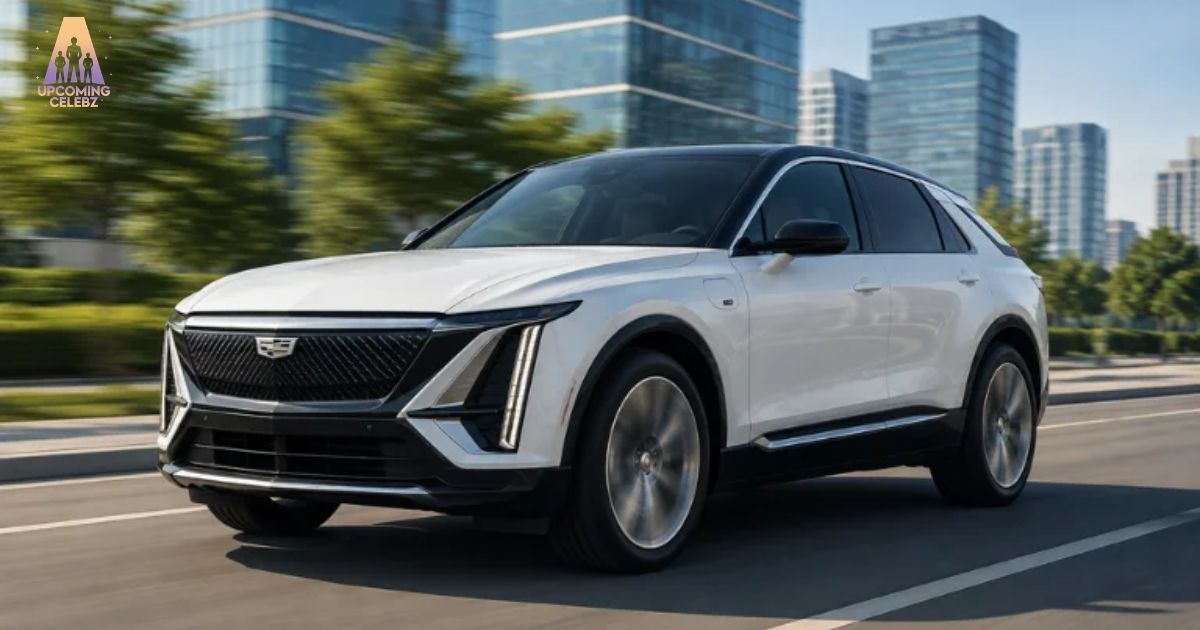
Cadillac LYRIQ Offer Different Ranges or Battery Usages: The Cadillac LYRIQ has several driving modes that change how the vehicle responds to the driver and road conditions. These settings can influence electricity consumption, but they do not change the physical size or capacity of the LYRIQ battery. In other words, choosing a different mode does not give the vehicle a different battery; it changes how that stored energy may be used.
The biggest difference usually comes from driving behavior. A driver who frequently accelerates hard, drives at high speeds, or uses the climate system heavily may consume more energy regardless of the selected mode. Likewise, gentle acceleration and steady driving can help reduce energy consumption.
For this reason, the range difference between driving modes should not be treated as a fixed number. The same LYRIQ can achieve different results from one trip to another depending on speed, traffic, weather, road surface, temperature, and driving style.
You can also read: Brasssmile com The Complete Guide to Understanding, Using, and Maximizing Its Potential
1. What Changes When a LYRIQ Drive Mode Is Selected?
A drive mode changes the way the LYRIQ feels and responds rather than changing its battery capacity. Depending on the selected setting, the vehicle can adjust characteristics such as accelerator response, steering feel, and traction behavior.
Tour is intended for normal everyday driving, while Sport provides a more responsive driving experience. Snow/Ice is designed to help when traction is limited, and My Mode allows certain characteristics to be personalized.
These differences can indirectly affect energy consumption because the vehicle may respond differently to accelerator inputs. However, the mode itself should not be viewed as a separate range setting.
A. Battery Capacity Does Not Change
Selecting Tour, Sport, Snow/Ice, or My Mode does not increase or decrease the amount of energy the battery can physically store. If the battery begins a trip at 80% charge, changing the drive mode does not alter that percentage.
What can change is the rate at which energy is consumed. For example, frequent strong acceleration may use electricity faster than gentle acceleration, even when both trips begin with the same battery charge.
B. Driving Behaviour Creates the Bigger Difference
The person behind the wheel has a major influence on real-world EV range. Rapid acceleration, frequent high-speed driving, and unnecessary braking can all affect consumption.
A LYRIQ driven smoothly in Sport Mode may use less energy than another LYRIQ driven aggressively in Tour Mode. This is why comparing modes without considering driving habits can produce misleading results.
2. Tour Mode as the Everyday Efficiency Choice
Tour Mode is suited to ordinary daily driving when comfort and predictable vehicle response are the priorities. Its more relaxed character can make it easier for many drivers to maintain smooth acceleration.
That can be useful for city trips, commuting, errands, and longer drives where maximum performance is not necessary.
A. Why Smooth Acceleration Helps
Electric motors can produce substantial torque quickly. Pressing the accelerator aggressively therefore demands a large amount of electrical power in a short period.
Using gradual inputs allows the vehicle to build speed without repeatedly demanding maximum power. This can help reduce unnecessary battery consumption during everyday driving.
B. Tour Mode on Longer Journeys
Tour Mode can be a practical choice for longer journeys because it supports a comfortable and controlled driving style. Keeping acceleration and speed relatively consistent can make energy consumption easier to manage.
Still, Tour Mode does not guarantee the longest possible range. Highway speed, wind, elevation, temperature, and traffic may have a greater impact on the final battery usage.
3. Sport Mode and Increased Power Demand
Sport Mode gives the LYRIQ a more responsive character. The quicker response can make acceleration feel stronger and more immediate, which may be appealing when the driver wants a more engaging experience.
Using that additional responsiveness frequently, however, can increase electricity consumption because stronger acceleration requires more power.
A. Why Fast Acceleration Costs Range
Getting a heavy electric vehicle up to speed quickly requires considerable energy. If the driver repeatedly accelerates hard and then brakes, much of that energy is no longer available for continued forward movement.
This is one reason performance-oriented driving can reduce the distance available from the same battery charge.
B. Can Sport Still Be Driven Efficiently?
Yes. Selecting Sport does not automatically mean the vehicle must be driven aggressively. A driver can use Sport while maintaining moderate speeds and applying the accelerator gently.
If the driving behavior remains similar, the difference in energy consumption between modes may be less noticeable than expected.
C. When Sport Mode Makes Sense
Sport Mode is mainly useful when the driver wants quicker vehicle response and a different driving feel. It is not primarily designed as a range-maximizing setting.
For normal commuting, drivers may prefer a smoother response. For situations where sharper acceleration and a more responsive feel are desired, Sport can provide that experience.
4. Snow/Ice Mode Is About Traction, Not Extra Miles
Snow/Ice Mode serves a different purpose from an efficiency-focused setting. It is intended for conditions where reduced traction can make acceleration more difficult, such as snow or icy roads.
The vehicle can alter its response to help reduce unnecessary wheel spin. Any change in energy consumption should therefore be considered alongside the road and weather conditions.
A. Cold Batteries and Winter Range
Cold weather can affect an electric vehicle’s energy use and battery performance. Heating the cabin can also require additional electricity, especially during very cold conditions.
As a result, lower winter range should not automatically be blamed on Snow/Ice Mode. Temperature itself can be an important factor.
B. Snow Creates Additional Resistance
Snow, slush, and wet surfaces can make it harder for a vehicle to move efficiently. Tires may encounter greater resistance, while slippery conditions can require changes in acceleration and speed.
These factors can increase energy consumption even when the driver is using the same mode as usual.
C. Safety Should Come Before Range
When roads are slippery, maintaining control is more important than trying to save a small amount of battery energy. Snow/Ice Mode is intended to support driving in those conditions.
Drivers should choose the setting appropriate for the road rather than avoiding it simply because they are concerned about range.
5. My Mode Can Produce Different Results
My Mode gives drivers an opportunity to personalize certain driving characteristics. Depending on the available settings, the driver can create a setup that feels more comfortable or responsive.
Because different configurations can encourage different driving responses, energy consumption may vary from one driver’s setup to another.
A. Setting Up My Mode for Daily Use
For regular commuting, a driver can choose settings that encourage smooth and predictable responses. A comfortable setup may make it easier to avoid unnecessary bursts of acceleration.
There is no universal My Mode configuration that will deliver the same efficiency for every driver. Personal driving habits and route conditions still matter.
B. Testing Your Personal Configuration
If you want to know whether your chosen setup affects consumption, compare several similar trips. Try to keep the route, speed, weather, and traffic conditions reasonably close.
Looking at several trips rather than one journey will give you a more useful indication of how your configuration performs.
6. Regenerative Braking Changes the Efficiency Picture
Regenerative braking allows the LYRIQ to recover some energy when the vehicle slows down. Instead of all braking energy being lost as heat, part of it can be converted back into electrical energy and sent toward the battery.
This can be particularly useful in situations where the vehicle repeatedly slows down and accelerates, such as urban traffic.
A. One-Pedal Driving in Traffic
One-Pedal Driving can allow the driver to slow the vehicle by reducing accelerator input. The electric motor can provide regenerative deceleration, helping recover some energy during the process.
It can make stop-and-go driving smoother for drivers who become comfortable with the system.
B. Regeneration Cannot Recover Every Loss
Regeneration is helpful, but it is not a perfect energy-recovery system. Some of the energy used to accelerate the vehicle is lost through various electrical, mechanical, and aerodynamic processes.
Therefore, avoiding unnecessary acceleration in the first place is generally more useful than relying on regeneration to recover energy afterward.
7. Highway Speed Can Matter More Than Drive Mode
At higher speeds, aerodynamic drag becomes increasingly important. This means a significant increase in highway speed can have a noticeable effect on energy consumption.
Consequently, the difference between driving at two different speeds may sometimes be more important than the difference between Tour and Sport.
A. Steady Speed Helps Reduce Waste
Frequent changes in speed require repeated acceleration and deceleration. Maintaining a consistent pace when traffic and road conditions allow can make energy use more predictable.
This does not mean driving at an unsafe or inappropriate speed. It simply means avoiding unnecessary speed changes.
B. Sport Versus Tour Is Not the Whole Story
Suppose one driver uses Sport but travels steadily at a moderate speed, while another uses Tour but repeatedly accelerates hard at higher speeds. The second vehicle could consume more energy.
This shows why drive-mode comparisons should always be considered together with actual driving behavior.
8. Heating and Air Conditioning Use Battery Energy
The LYRIQ uses electrical energy for cabin heating and cooling. During very hot or cold weather, climate control can therefore contribute noticeably to total battery consumption.
The effect can be more obvious on shorter trips because the vehicle may spend a larger proportion of the journey bringing the cabin to the desired temperature.
A. Preconditioning Can Help Before Departure
Preconditioning the cabin while the vehicle is connected to an appropriate charging source can reduce the amount of battery energy needed for initial heating or cooling after departure.
This can be especially useful during extreme weather.
B. Moderate Climate Settings Are More Practical
Drivers looking to conserve energy can avoid unnecessarily extreme cabin settings and use climate control sensibly.
However, comfort and safety should still come first. Range savings should not come at the expense of maintaining a comfortable cabin or clear visibility.
9. Why the Range Display Keeps Changing
The estimated range shown by an EV is influenced by recent driving conditions. It is therefore normal for the displayed number to rise or fall as the vehicle’s energy consumption changes.
A long period of efficient driving may improve the estimate, while fast driving or heavy climate use may cause the estimated remaining distance to decrease more quickly.
A. Battery Percentage Tells a Different Story
Battery percentage indicates the remaining state of charge, while the estimated range attempts to predict how far that remaining energy could take you.
Two LYRIQs showing the same battery percentage can display different estimated ranges if their recent driving conditions have been different.
B. Look at Consumption Over Complete Trips
Instead of judging efficiency from the range estimate alone, compare energy consumption over full trips.
Recording distance traveled, battery percentage used, average speed, and weather conditions can help reveal which driving habits actually affect your LYRIQ’s efficiency.
10. RWD and AWD Should Not Be Confused With Drive Modes
Rear-wheel drive and all-wheel drive describe the vehicle’s drivetrain configuration. Tour, Sport, Snow/Ice, and My Mode are driving settings.
This distinction matters because different LYRIQ configurations can have different official range figures regardless of which driving mode is selected.
A. Different Models Can Have Different Range Ratings
Range ratings can vary according to drivetrain, equipment, wheels, tires, and other vehicle specifications. Therefore, a RWD LYRIQ and an AWD LYRIQ should not be compared as though they were identical vehicles simply because they share the LYRIQ name.
The official EPA range should always be checked for the specific configuration being discussed.
B. Compare Like With Like
For a meaningful comparison, use the same drivetrain and similar vehicle configuration. Ideally, compare trips with similar speeds, weather, traffic, terrain, and climate-control use.
This helps separate the effect of driving conditions from differences caused by the vehicle itself.
11. Practical Ways to Get More Range From a LYRIQ
Improving real-world range is less about finding a magic driving mode and more about reducing unnecessary energy use.
Smooth acceleration, reasonable speeds, careful climate use, and anticipation of traffic can all contribute to better efficiency.
A. Watch Energy Use Instead of Guessing
Pay attention to the vehicle’s energy-consumption information during your normal trips. Look for patterns rather than focusing on one journey.
Over several trips, you may find that speed, temperature, HVAC use, or acceleration has a much greater effect than changing between two drive modes.
B. Choose the Mode for the Situation
Use Tour when you want a relaxed everyday driving experience, Sport when you want sharper responses, Snow/Ice when road conditions call for additional traction-focused behavior, and My Mode when you want to personalize the driving experience.
The appropriate mode depends on the situation. Efficient driving comes from combining the suitable mode with sensible speed, smooth inputs, and awareness of conditions.
12. Final Answer: Do LYRIQ Drive Modes Give Different Range?
LYRIQ drive modes can affect battery consumption indirectly, but they do not change the battery’s capacity. The primary difference is how the vehicle responds to accelerator inputs, steering, braking, and road conditions.
Sport may use more energy when its stronger performance encourages harder acceleration, while Tour can support a smoother everyday driving style. Snow/Ice is designed around traction rather than increasing range, and My Mode can be customized according to the driver’s preferences.
Ultimately, there is no fixed number of miles that the LYRIQ gains or loses simply because you switch driving modes. Speed, acceleration, temperature, HVAC use, terrain, traffic, tires, and driving habits can all have a substantial effect on actual range.

Alone is the founder and lead content creator of UpcomingCelebz.com, a platform dedicated to delivering the latest updates, news, and insights about rising and trending celebrities from around the world. With a strong passion for entertainment journalism, Alone focuses on creating engaging, easy-to-read, and well-researched content that keeps readers updated on the ever-evolving world of fame and pop culture.
Through UpcomingCelebz, Alone aims to highlight both emerging talents and well-known personalities, offering readers authentic stories, biographies, and entertainment news in a simple and accessible format. The goal is to build a trusted space where celebrity enthusiasts can discover accurate and interesting information about their favorite stars.